Transit agencies across the US are confronting one of the toughest budget environments in recent memory. Pandemic relief funding is sunsetting, operating costs are rising, and many systems are weighing difficult service adjustments. Yet for planners and schedulers who have worked through past cycles of financial strain, several proven strategies consistently help agencies stay focused and make durable decisions.
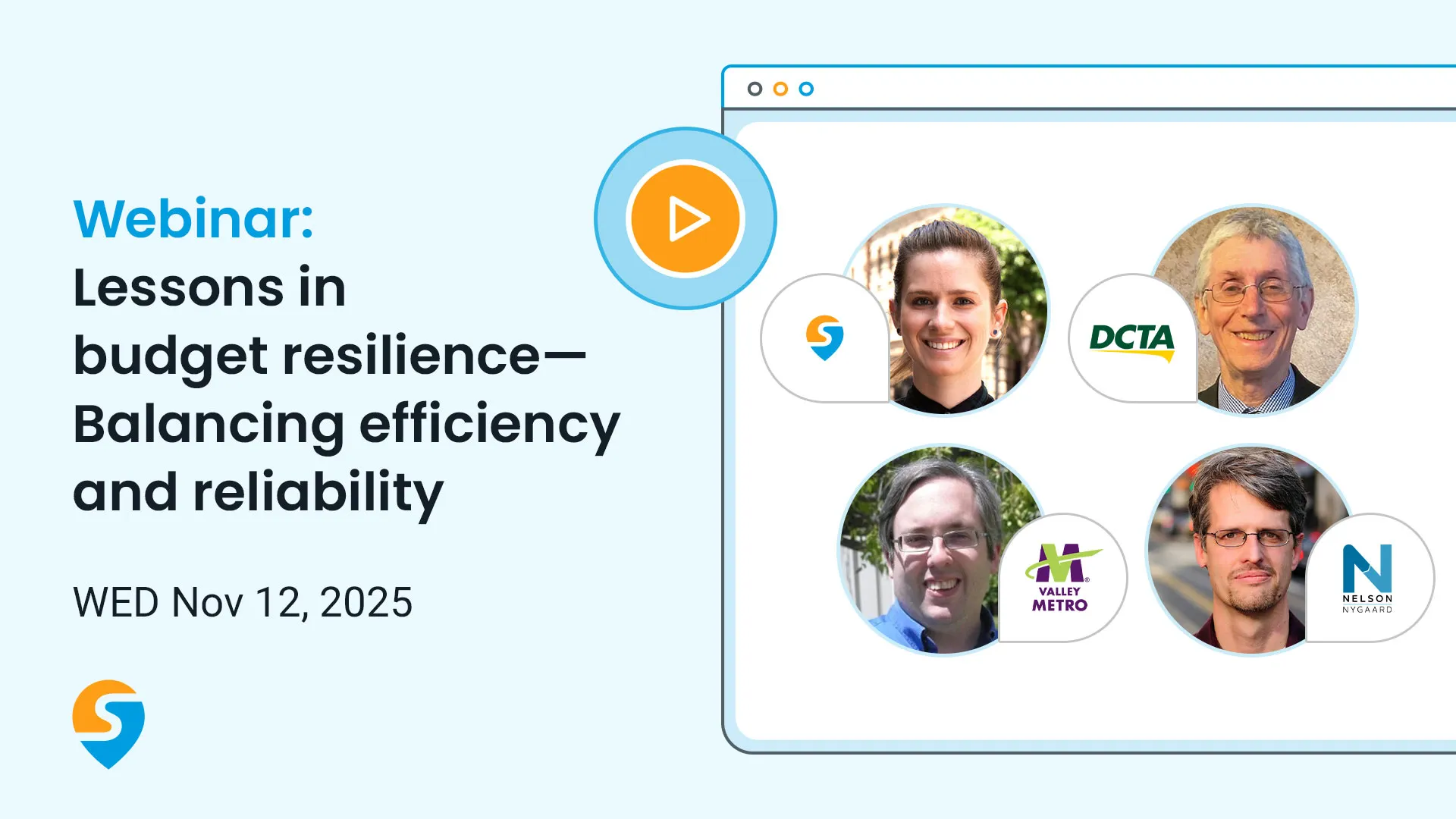
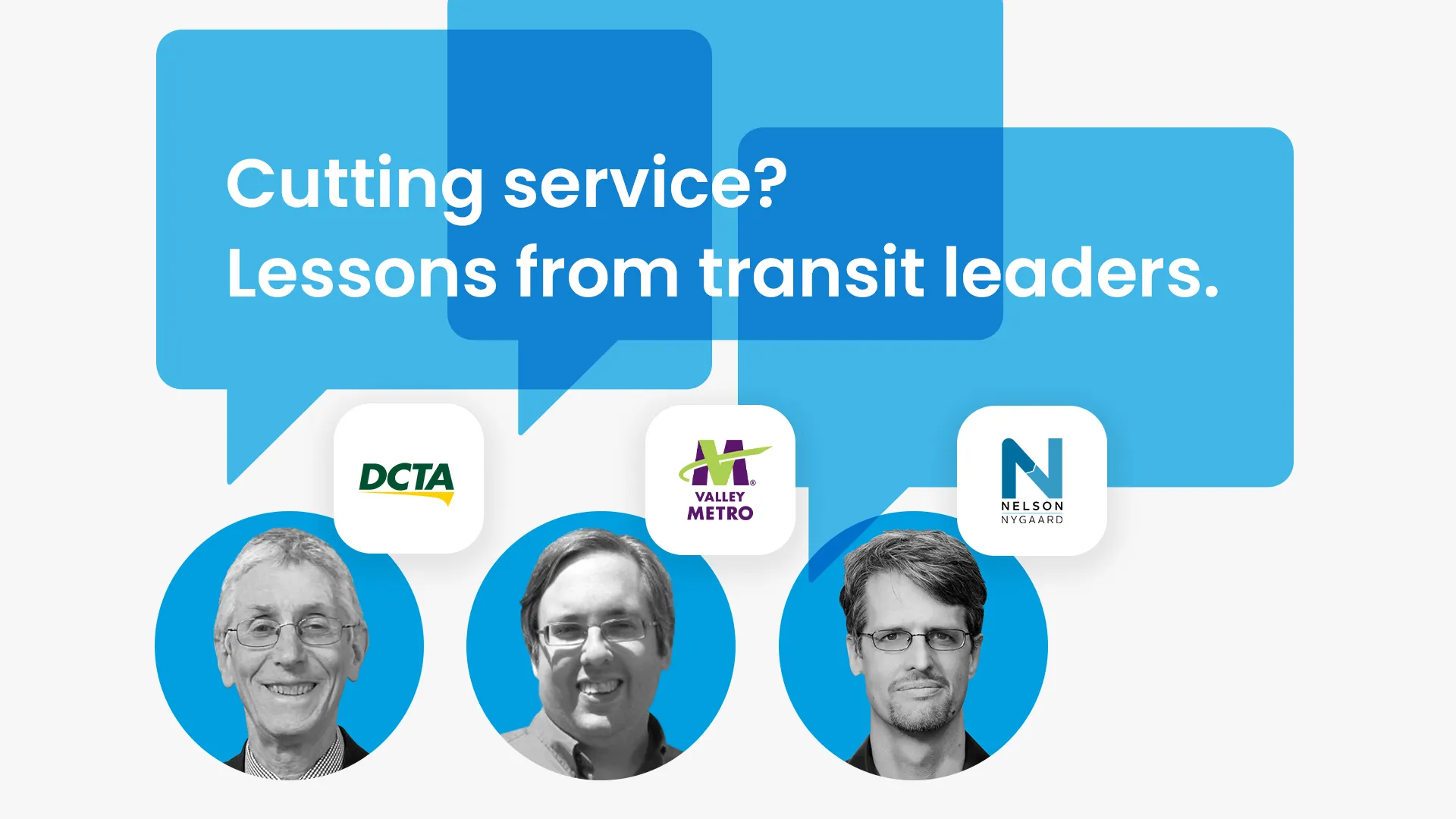
Swiftly recently brought together leaders from Valley Metro in Phoenix, Denton County Transit Authority (DCTA) in North Texas, and Nelson\Nygaard to share their top lessons when budgets tighten and tradeoffs can’t be avoided.
Set up a consultation with a Swiftly expert to learn how better transit data and tools can unlock more efficient service.
Lesson 1: The hardest part of budget pressure is political, not mathematical
People often assume service planning is mainly about working through schedules and data. In difficult years, the bigger challenge is internal alignment and organizational readiness.
“I thought being a planner was a technical role,” said Todd Plesko, planning advisor at DCTA. “But over time, I learned it’s really about how to live within political environments, union environments, and employee environments.”
Boards need context. Operators need trust in the process. Union leadership needs confidence that changes are grounded in fair analysis. Agencies that address these realities early maintain more control over how decisions unfold. When communication lags, even well-supported adjustments can be slowed or even reversed.
Lesson 2: Ridership analysis helps minimize the impact of unavoidable cuts
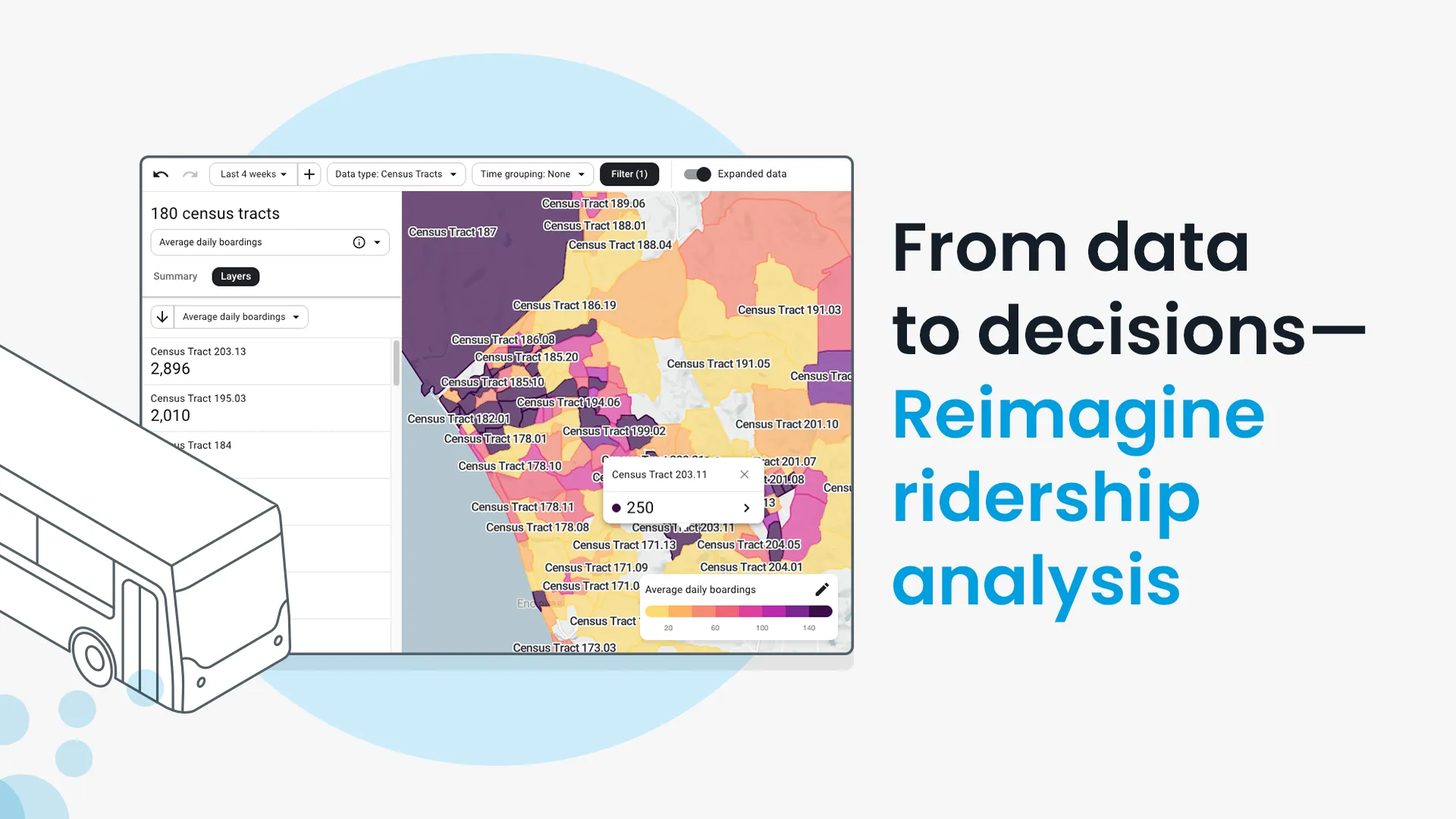
When service reductions become unavoidable, ridership data becomes essential for understanding who will be affected and how to minimize harm. Rather than applying broad reductions across the board, many agencies focus on ridership patterns to target changes where the impact will be smallest.
This type of analysis is far simpler today than in the past. Tools like Hopthru Ridership offer agencies a way to intuitively visualize ridership at each stop and learn where operational dollars will go the furthest. This level of precision lets agencies distinguish between low-demand trips that can be adjusted with limited disruption and trips that serve as critical lifelines for riders.
“When you’re looking at reductions, the goal is to make sure the fewest number of people feel the impact,” Plesko said.

This approach doesn’t make cuts painless, but it allows agencies to protect the routes and trips that matter most. Targeted decisions help preserve mobility for the majority of riders while avoiding the cascading issues that often accompany broader, less strategic reductions.
Lesson 3: Granular run-time data can stretch service further without putting a strain on operators
Industry veterans also note that cutting service isn’t the only tool in an agency’s toolchest during financial strain. Many agencies find meaningful efficiencies by calibrating run-times, adjusting layovers, or interlining routes to get more out of the service they already operate. But those changes touch operators directly, and their experience determines whether the adjustments work as intended.
Granular run-time data helps agencies navigate this balance. Stop-level performance data and tools that uncover patterns by time of day or day of week offer clearer pictures of what the schedule is truly asking of operators. This type of clarity helps identify where small tweaks could create noticeable efficiency gains without eroding operator trust.
At DCTA, for example, Plesko noticed that on one route, operators were consistently waiting just before timepoints to avoid arriving early, a behavior he refers to as “hide and seek.” The dynamic only became visible once the team began analyzing stop-level run-time data. With a clearer view of how the route actually operated, they were able to recalibrate run-times so operators could stay on schedule without getting defensive.
On another pair of routes, Plesko found one lacked sufficient recovery time while the other had more than necessary. Interlining the two initially raised concerns, but operators embraced the change once they felt how much smoother their routes became. The same data-driven visibility helped refine layover times to protect the operator experience.
These targeted adjustments had a significant impact. DCTA improved on-time performance by an impressive 28% after rebalancing run-times, layovers, and interlining routes.
For Plesko, these results underscore the outsize impact small operational changes can have when data analysis meets operator behavior.
Lesson 4: Modern data allows planners to adapt quickly and avoid compounding problems
Until recently, many agencies relied on annual ridechecks or operator notes to adjust schedules. Planners often knew where problems existed but lacked timely data to address them.

Seeing daily on-time performance and ridership patterns “enables much faster adjustments,” shared Christopher MacKechnie, who spent many years scheduling service at Long Beach Transit and now works at Valley Metro in Phoenix. Continuous visibility helps planners identify issues early, whether it’s a segment with chronic delays, trips that consistently arrive early, or routes that need more balanced recovery time.
MacKechnie added that fieldwork still plays an essential role. “I learn something new every time I ride a bus. But modern data and insights, like Swiftly, make those discoveries easier to validate and refine. They allow agencies to correct issues before they escalate into major reliability problems.”
Build trust under financial pressure
Lesson 5: Protecting the core network strengthens recovery
History shows that systems rebound most effectively when they safeguard core service during tough times.
“The key takeaway for me during every budget crunch in the past has been: don’t touch your core,” Wittmann said. “The agencies that protected their high-frequency service were the ones whose ridership recovered the fastest after the crisis.”
Wittmann recalled applying this principle during the financial crisis for a city in Colorado.

MacKechnie organizes routes into three functional groups to support this decision-making:
- Primary routes—the backbone of mobility
- Secondary routes—important but flexible
- Tertiary routes—duplicative or low-demand coverage
This structure helps planners see where adjustments will be least disruptive. Protecting the backbone keeps the network reliable and prevents cascading reliability issues.
Lesson 6: Clear service standards give agencies a foundation for tough decisions
When budgets shrink, agencies need a shared framework for evaluating tradeoffs. Service standards provide that foundation, but only when leadership understands them and uses them consistently.
“Most board members don’t know what passengers per hour mean, or what ‘good’ looks like in on-time performance,” said Wittmann. “Service standards are an educational process. They help define what’s important for your agency, and they set transparent expectations for how decisions get made.”
A recent Swiftly poll reflects the challenge: two-thirds of respondents said they either haven’t updated their service standards recently or don’t know whether they have. This gap makes alignment harder precisely when clarity is most needed.
Agencies that define their priorities early, before budgets tighten, tend to navigate budget strain with fewer surprises and more consistent communication.
Putting lessons into practice
Budget pressures are tough no matter the circumstances.Agencies that draw on the experience of those who’ve been through past cycles are better prepared for what lies ahead.
Agencies that adopt these habits early are better positioned when hard choices arrive. Over time, these steady practices make tough years more manageable and decisions more durable when the storm eventually passes.