



July 29, 2026
Entered easily, communicated seamlessly, trusted everywhere: The new standard for managing disruptions

Jenny Mi
Strategic Product Marketing Manager
.png)
Every shift, operations teams face urgent, critical decisions that keep transit moving—a detour around an incident, a canceled trip, a closed stop. Staff make the right calls, but their legacy CAD/AVL often can’t keep up.
Entering a single adjustment into a legacy CAD/AVL can be a slow, clunky, or outright impossible experience for certain disruption types. And even if staff do enter an adjustment, the information rarely reaches everywhere it needs to go. This dangerous gap shows up differently across agencies:
- Operators start the shift with a static list of lefts and rights and no real-time detour updates. When plans change mid-route, they must radio dispatch for guidance—a chaotic, distracting scramble.
- Riders are usually the last to know, if at all. Too often, they are left waiting for a bus that is never coming.
- Customer service and communications teams are left out of the loop. When riders call in about a live detour, staff can’t see what’s happening or answer questions about impacts to service.
- Planners and schedulers feel the pain later. They are unable to tell whether service was intentionally changed on historical trips, or how that should shape future scheduling and planning.
All of this unfolds against a difficult financial backdrop. As agencies are asked to do more with less, outdated tools burn the two things they can least afford to lose: staff time and rider trust.
The ideal disruption solution: Entered easily, communicated seamlessly, and trusted everywhere
The ideal solution is not complicated to describe. Agencies need a way to enter adjustments quickly and accurately; streamline the operational scramble of communicating with customer service and operators; and ensure riders have complete, understandable information about their service.
Swiftly Service Adjustments is the only solution in the market that can deliver on all the above.
When an adjustment is entered—whether drawn directly in Swiftly or from an integration with an existing CAD/AVL—it propagates instantly across Swiftly’s trusted Transit Data Platform:
- Navigation in Onboard App sets the standard for keeping operators informed and safe. The moment a dispatcher enters an adjustment, turn-by-turn directions update in real-time in the vehicle—no radio relay, no handwritten notes at the last stop, no guessing through an unfamiliar detour.
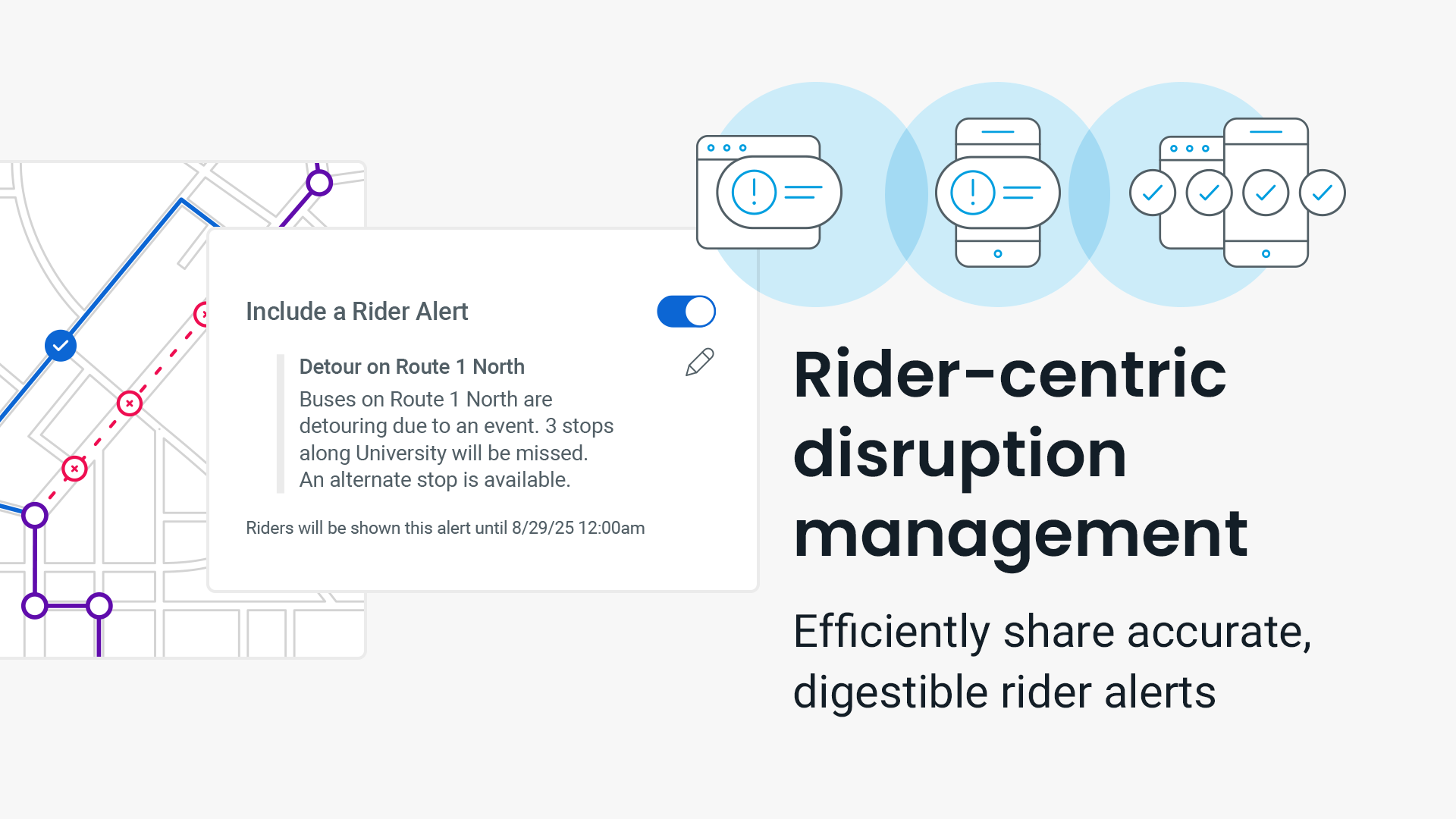
- Templated Rider Alerts auto-generates alert text from the adjustment—pre-approved, rider-friendly language that’s ready to publish in a single click.
- Real-Time Passenger Predictions updates ETAs immediately. Swiftly is the only system to generate detour-aware predictions, so when a detour is entered, rider apps like Google Maps and Transit App automatically show the corrected route or updated ETAs. This means riders never have to be stuck waiting for the bus at a stop that is not being served.
Before having Swiftly Service Adjustments, creating a detour at Straeto took up to 30 minutes. Now, it takes less than 5 minutes, saving 210+ hours per year.
You can request a consultation to learn how your team can manage disruptions with Swiftly, and read on for information on new enhancements to our existing tools.
Three new capabilities that raise the standard
This quarter, we will launch enhancements to Service Adjustments that further improve an agency’s ability to enter, communicate, and trust detour information.
Detour drawing enhancements—fast, accurate entry
When an unexpected incident strikes, the details the dispatcher enters determine the quality of information that reaches riders, operators, and customer service. Every second of friction at the point of entry is a delay in accurate data reaching riders and staff.
We rebuilt Swiftly’s detour drawing tools to reduce that friction: a smoother map, more accurate detour paths via snap-to-street drawing, and helpful undo/redo functionality.
The difference in information quality stands out:
- A detour entered quickly and precisely becomes a correct turn-by-turn route for an operator, a reliable source-of-truth for agency staff, and accurate real-time information for riders.
- A detour drawn slowly with errors, or not drawn at all, results in a frustrated operator, a negative rider experience, and a call to customer service.
“We have a large service area to manage at SMART. When disruptions occur, reroutes can span many miles across the region. The new snap-to-street feature in Service Adjustments, paired with Swiftly’s existing Trip-Modifications support, allows us to provide visual detours to riders in Transit faster than ever.”
—Corey Rowe, Policy and Planning Coordinator at Suburban Mobility Authority for Regional Transportation
Shareable detour directions—draw once, share anywhere
Users will now be able to generate exportable turn-by-turn directions for detours directly from the Swiftly Dashboard. The information can drop into any channel an agency already uses to reach operators, so no driver is left navigating an unfamiliar detour from memory.
Those directions flex to fit two distinct needs:
- Print to prepare operators ahead of a detour. Hand drivers their turn-by-turn directions before the shift, so they can review the route in advance. This proactive training minimizes mistakes and ensures operators aren’t caught off-guard once they’re behind the wheel.
- Copy and paste to other tools and workflows. Drop the same directions into whatever systems your team already relies on, seamlessly closing any gaps, so every downstream tool and workflow reflects the change.
Ingest cancellations, TripModifications, and skipped stops—sharper predictions and complete records
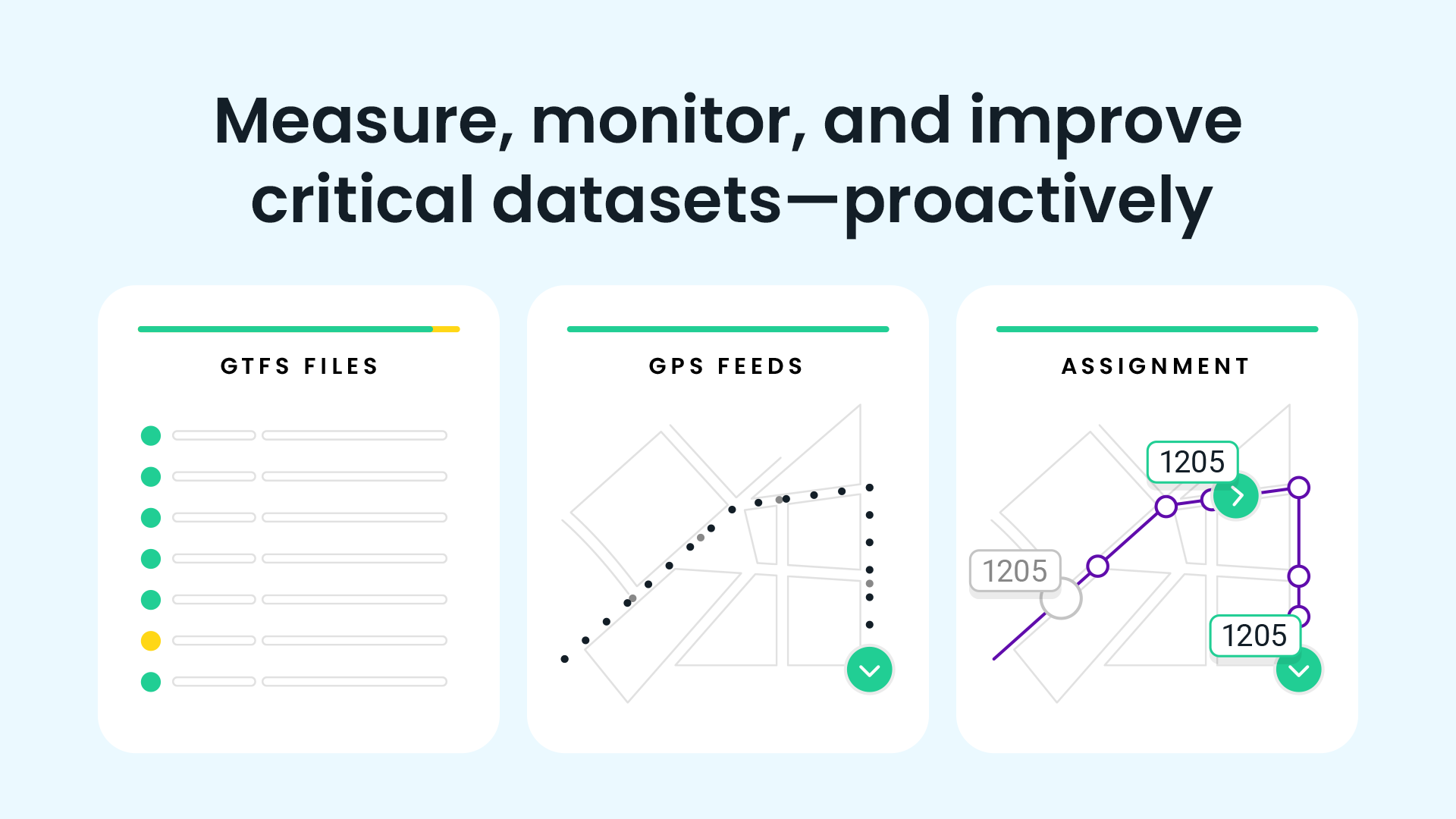
Swiftly’s ingestion capabilities meet agencies where they already are. Service Adjustments can now pull in cancellations via GTFS-rt or bulk API, detour shapes and temporary stops via the Trip-Modifications standard, and skipped stops. This means data entered into existing operational systems automatically flows to riders and staff through the channels they rely on, without changing how teams already work. With that data in Swiftly, we can generate accurate, disruption-aware predictions and complete historical records, keeping the information clean and trustworthy.
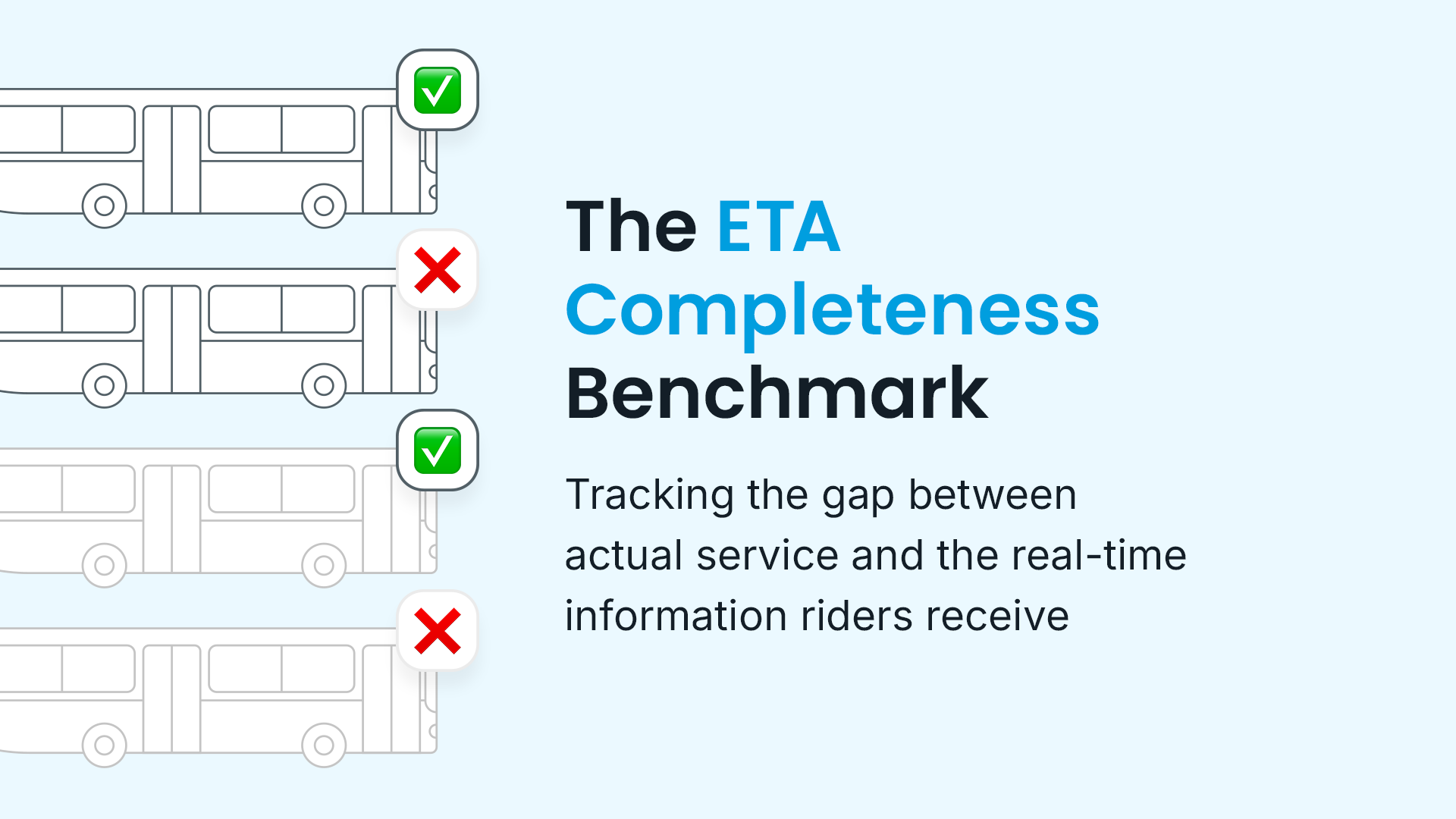
The payoff is real-time information that more consistently reflects service on the streets. You can read more about how Swiftly measures the impact on riders with prediction accuracy and prediction completeness.
The agency that acts as one
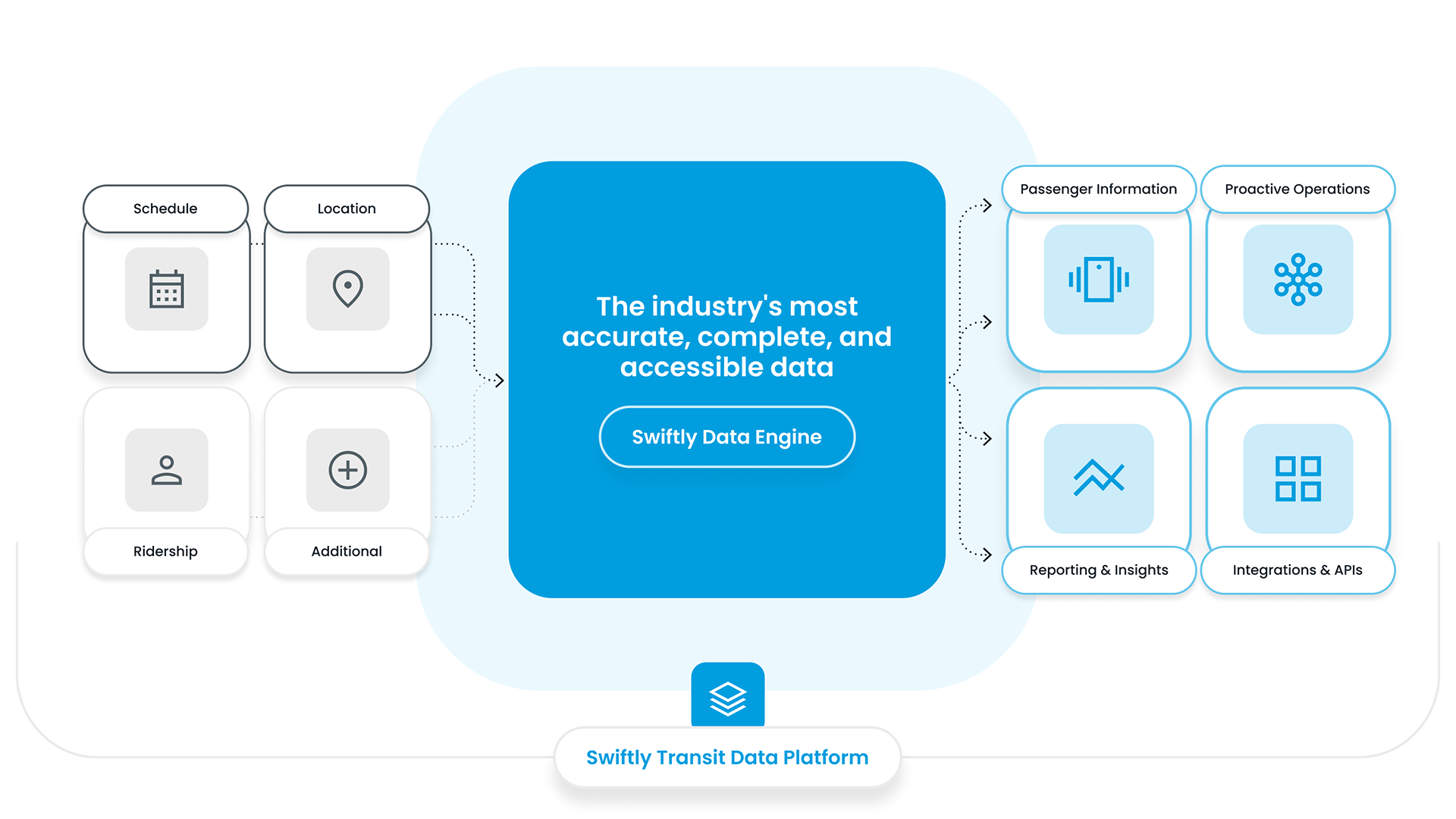
The reason a single entry in Service Adjustments can reach riders, operators, customer service, and historical analytics at the same moment is that they all run on the same data engine. With Swiftly’s Transit Data Platform, one version of the truth exists—and that reliable, consistent information powers every product that touches a service adjustment.
“With detours happening almost daily…keeping passengers informed is a top priority. Today, our Operations staff can draw detours directly in our system, and Swiftly automatically updates real-time predictions, displays detour paths in the Transit app, and sends out templated rider alerts. This streamlined process allows our Operations team to work more efficiently, spend less time on data entry, and communicate detours to passengers faster and more accurately.”
—Sean Paio, VP of Transportation, Honolulu’s TheBus
A modern transit agency makes decisions in the operations control center that are entered easily, communicated seamlessly, and trusted everywhere.
Ready to see what that looks like for your agency? Schedule a demo to see Service Adjustments in action.
Request a demo
The rich text element allows you to create and format headings, paragraphs, blockquotes, images, and video all in one place instead of having to add and format them individually. Just double-click and easily create content.
Last Name, Agency

What’s a Rich Text element?
What’s a Rich Text element?
What’s a Rich Text element?
What’s a Rich Text element?
What’s a Rich Text element?
The rich text element allows you to create and format headings, paragraphs, blockquotes, images, and video all in one place instead of having to add and format them individually. Just double-click and easily create content.
Last Name, Agency
Static and dynamic content editing
A rich text element can be used with static or dynamic content. For static content, just drop it into any page and begin editing. For dynamic content, add a rich text field to any collection and then connect a rich text element to that field in the settings panel. Voila!
How to customize formatting for each rich text
Headings, paragraphs, blockquotes, figures, images, and figure captions can all be styled after a class is added to the rich text element using the "When inside of" nested selector system.
- text goes here
- text goes here
- text goes here
- text goes here
- text goes here
- text goes here



Swiftly, Inc.
2261 Market Street #4151
San Francisco, CA 94114

©2026 Swiftly, Inc. All rights reserved.


It looks like you're located in Spain.
¿Quieres visitar nuestro sitio web en español?
