The State of Public Transit 2025 Industry Report

Public transit is at a pivotal moment. After weathering a global pandemic that reshaped travel patterns, agencies are now navigating a complex mix of recovery and reinvention. The good news? Ridership is back—exceeding pre-pandemic levels in many cities across the US. The challenge? Funding stability remains uncertain, and agencies are under pressure to do more with less.
This year's State of Public Transit—our sixth annual edition—dives deep into the hard numbers behind these trends. We explore the real implications of recent funding wins, the evolving role of technology in operations, and the strategies agencies are using to adapt to changing rider expectations. Our goal is simple: to provide transit professionals with actionable insights that help them tackle their most pressing challenges head-on.
Report overview
An industry snapshot of North American agencies
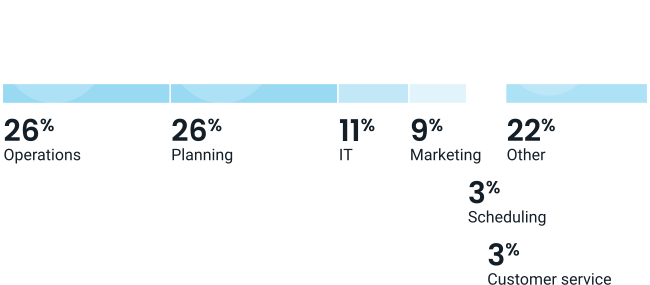
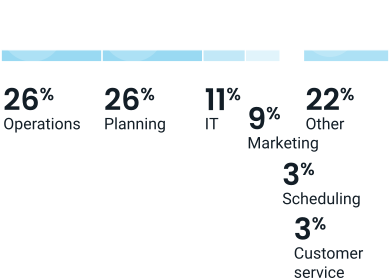
What functional area do you work in?
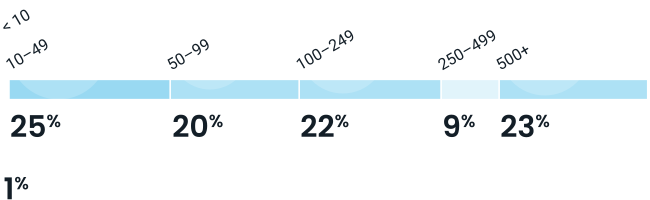
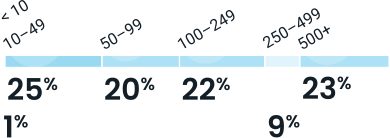
How many vehicles are in your agency's fleet?
Chapter 1: Funding and ridership
Transit is gaining momentum, but uncertainty remains
2024 was a marquee year for state and local transit ballot initiatives.1

40

87%

$25B+
Another massive win: Ridership is trending toward pre-pandemic levels.2
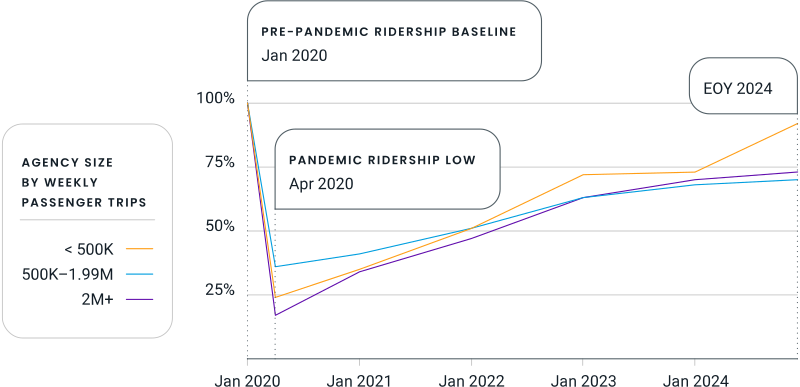
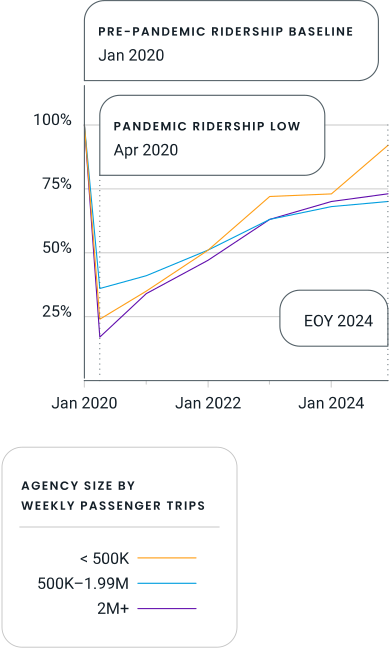
Many agencies have returned to or even surpassed pre-pandemic ridership levels.2
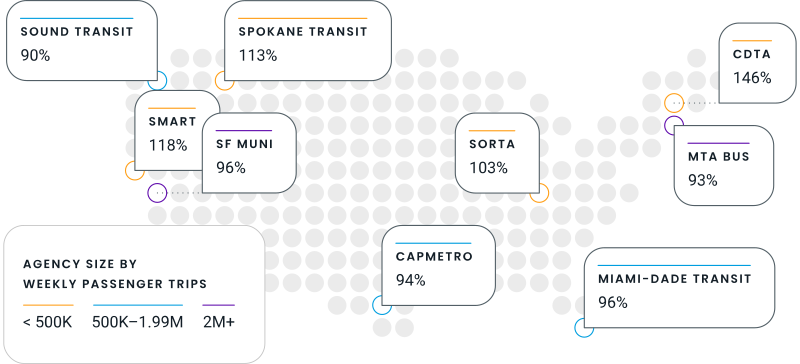
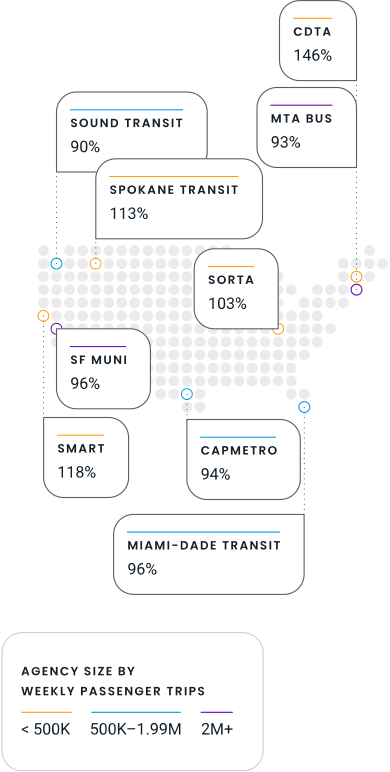
But pandemic-era infrastructure spending has come to an end as well. It was likely a one-time federal injection.3

Together, these developments are causing a mix of excitement and anxiety.
An area of opportunity shines through: Rising ridership often leads to increased funding—

However, ridership visibility significantly drops off at more granular levels.
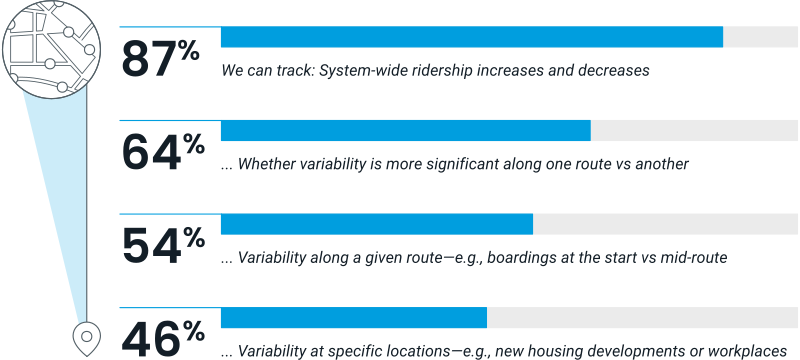
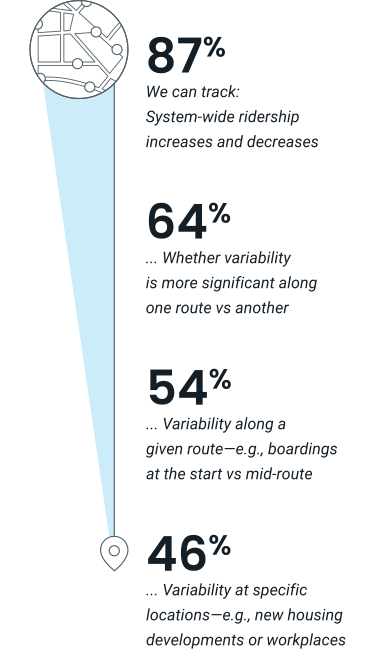
This presents an opportunity.
High-resolution ridership data can help secure additional funding, aid with resource allocation, and highlight opportunities to further increase ridership.
Agency spotlight: NCTD increases ridership counts by 7% overnight
Momentum depends on understanding ridership
Chapter 2: Real-time passenger information
RTPI is improving, but there's still room for growth
Despite these gains, service disruptions remain a pain point for the vast majority of agencies. The numbers reflect this: 70% regularly leave riders misinformed during service disruptions. Challenges stem from a persistent mix of issues with transit data, including incomplete datasets, unassigned vehicles, and other data anomalies that impact the rider experience.
Agencies have made major strides in improving real-time passenger information over the last year.

+55%

+20%

+8%
More agencies are making sure riders stay informed, both when service runs smoothly and when it's disrupted or canceled.

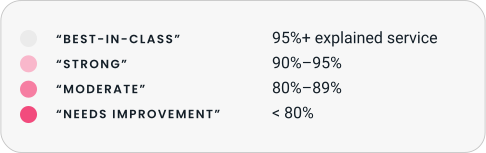
30% of agencies provide "best-in-class" explained service to their riders.4

What is "explained service"?
But there's still room for improvement.

70% of agencies still face communication challenges. Anything less than "best-in-class" regularly leaves riders misinformed.4
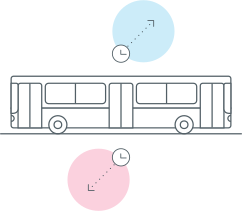
What does "unexplained service" mean for passengers?
Only 31% of agencies say their real-time predictions reflect detours or other service disruptions.

29% of agencies say their real-time information lags behind what riders expect in other day-to-day contexts.

Agencies are narrowing the gap using the latest advancements in real-time data.
Agency spotlight: MDOT MTA embraces new RTPI gold standard
Disruption-aware RTPI: Fewer surprises for riders
Chapter 3: Service reliability
Multi-pronged strategies are improving reliability
The shift is striking. Over the past year, the share of agencies reporting OTP improvements grew by 61%, which points to a growing alignment between goals and outcomes. A key driver? Agencies seeing gains are adopting a multi-pronged approach, applying a full-court press on reliability.
The last year saw major shifts in OTP.
Agencies have made major strides in improving real-time passenger information over the last year.

36%

34%

29%
The number of agencies with OTP improvements jumped 61% since last year, signaling real momentum.
What’s behind these gains? Tackling reliability on multiple fronts.

36%

34%

29%

29%
When all these strategies come together, reliability can reach new levels.
Agency spotlight: Miami-Dade improves OTP by up to 10%
Reliability is like a puzzle—every piece counts
Reliability in 2025 also goes beyond just schedule adherence. It encompasses the entire transit experience, from reducing bus bunching to smooth service recovery when disruptions happen. This means equipping staff with the tools and insights to manage operations proactively, addressing issues before they affect riders.
Chapter 4: Proactive operations and staff productivity
Disruptions are inevitable but reactive mode shouldn't be
The impact extends beyond operational efficiency. It also causes a ripple effect that impacts staff morale, hiring, and retention. While these challenges are significant, they also open the door for meaningful improvements. By enhancing communication strategies and refining processes, agencies can create an environment where staff feel more supported and prepared to handle daily demands.
Almost two-thirds of respondents call their operations reactive or passive.
60%

6%
34%
A key barrier to proactive operations: Dispatchers report struggling to effectively communicate with operators, especially when navigating unfamiliar routes.
What challenges do your operators face while navigating their routes?

57%

55%

30%
about road closures

25%
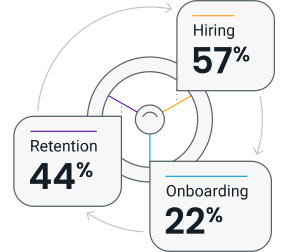
These challenges don’t just affect service—they also make it harder to hire (57%), onboard (22%), and retain (44%) staff, particularly operators.
Agencies also cite a growing generation gap between newer and seasoned staff.
About half of agencies (51%) say newer staff have higher expectations around transit technology compared to veterans.

Consumer apps are setting new usability standards, making operational tools feel less intuitive for newer staff.
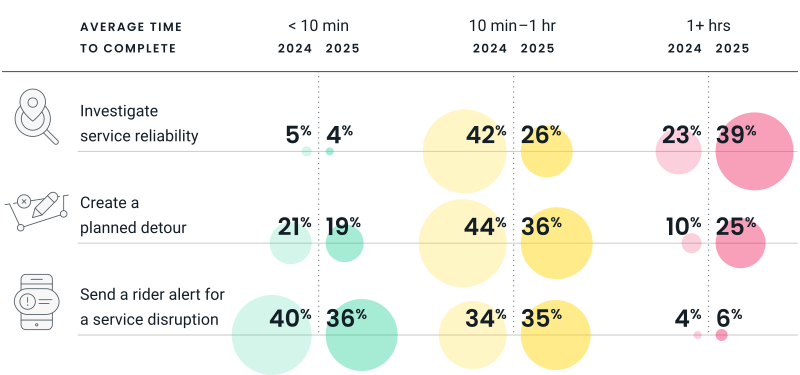
Team efficiency may be taking a hit. Some common tasks that previously took 10–60 minutes are now taking over an hour. Among these: Investigating reliability and creating detours.
Meanwhile, the share of agencies that complete these tasks in under 10 minutes—a reflection of system usability—changed little since last year.
The generation gap is likely to grow in coming years. 40% of agencies find it difficult to transfer institutional knowledge when experienced staff retire.

Intuitive tools can shift the tide. They ease communication gaps, simplify workflows, and help teams stay ahead of issues.
Agency spotlight: CapMetro responds fast when disruptions hit
Proactive operations start with the staff experience
This is especially true as the generation gap continues to grow. For new hires, staff-friendly tools facilitate getting up to speed without overwhelming complexity. And for experienced staff, intuitive tools prevent spending precious bandwidth on unnecessarily manual workflows.
Chapter 5: Transit technology and data
Interoperable systems power data-driven transit decisions
Solving these challenges requires a strategic approach—leveraging data in meaningful ways, deploying best-of-breed technology to solve acute problems, and ensuring that technology serves both staff and riders without adding unnecessary complexity. Agencies that succeed in these areas will be better positioned to enhance service reliability, streamline operations, and deliver a more responsive transit experience.
Two-thirds of agencies say that interoperability, modularity, and data standards are "very important" when adopting new technologies.5
32%
2%

66%
But agencies report mixed success with tech meeting their daily needs. The top three areas where tech excels are the same areas where others find it lacking.
39%
30%
30%
40%
24%
43%

For many agencies, disjointed data is the barrier holding their technology back.
Agencies are demanding a more modular future
This transition isn't just about swapping out old tools—it's about rethinking how technology works together to improve collaboration, drive smarter decisions, and ultimately enhance service delivery. Agencies have the power to shape the future by demanding solutions that meet these criteria. The question is—are agencies ready to take the next step?
.avif)
